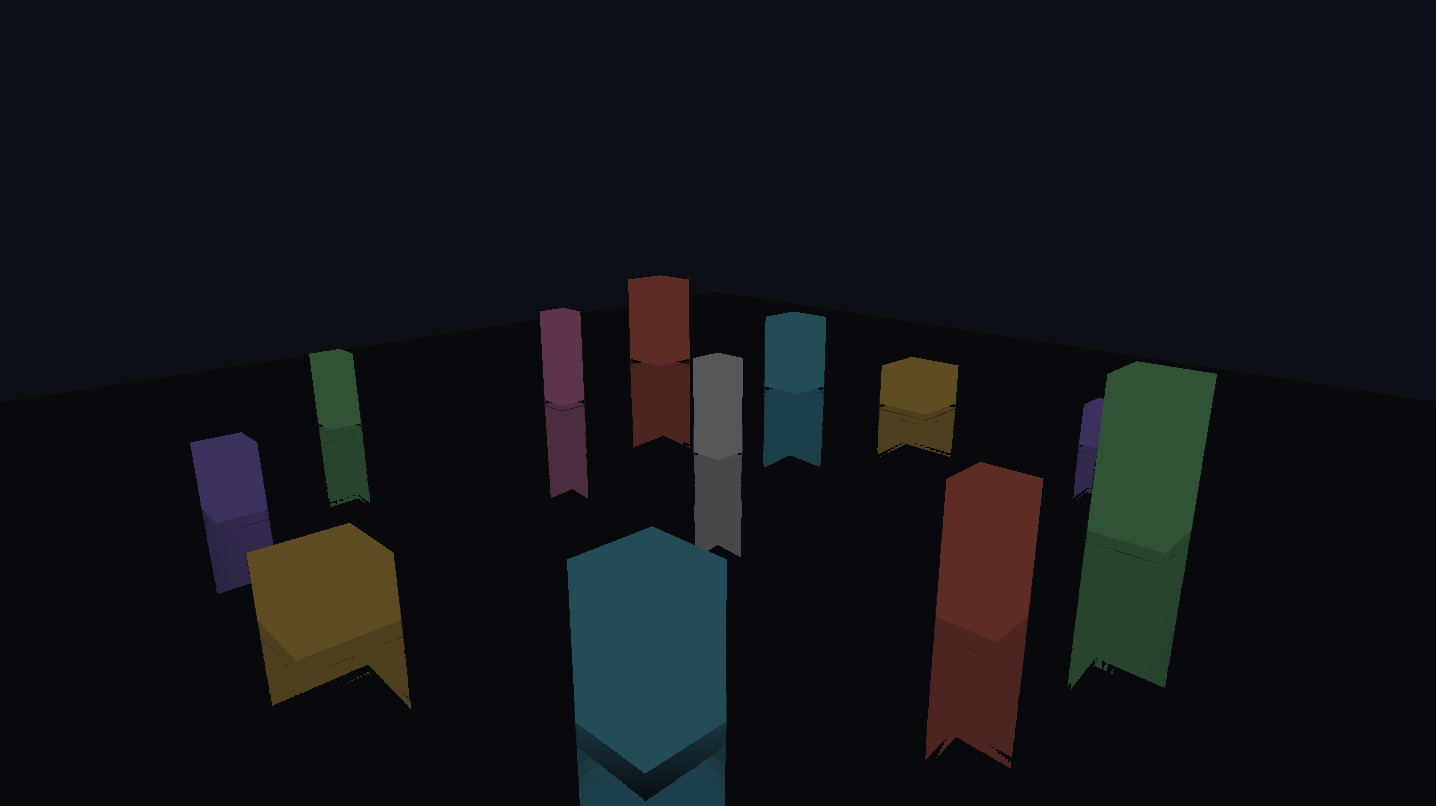
How it worksReflections are found in the image already on screen. From a mirror pixel, the view ray is bounced off the surface normal and stepped forward; at each step the ray's depth is compared with the scene depth stored in the G-buffer, and when the ray sinks just behind a surface it has hit something — so its lit colour is copied back as the reflection. Because it only knows what's on screen, anything off-frame or hidden can't reflect, which is why the mirror fades at the edges. A bigger step marches faster but can skip thin objects; thickness sets how forgiving the hit test is.